A walk with JADE’s Spanish-speaking group, three handouts and a map of a wetland hidden under the forest.
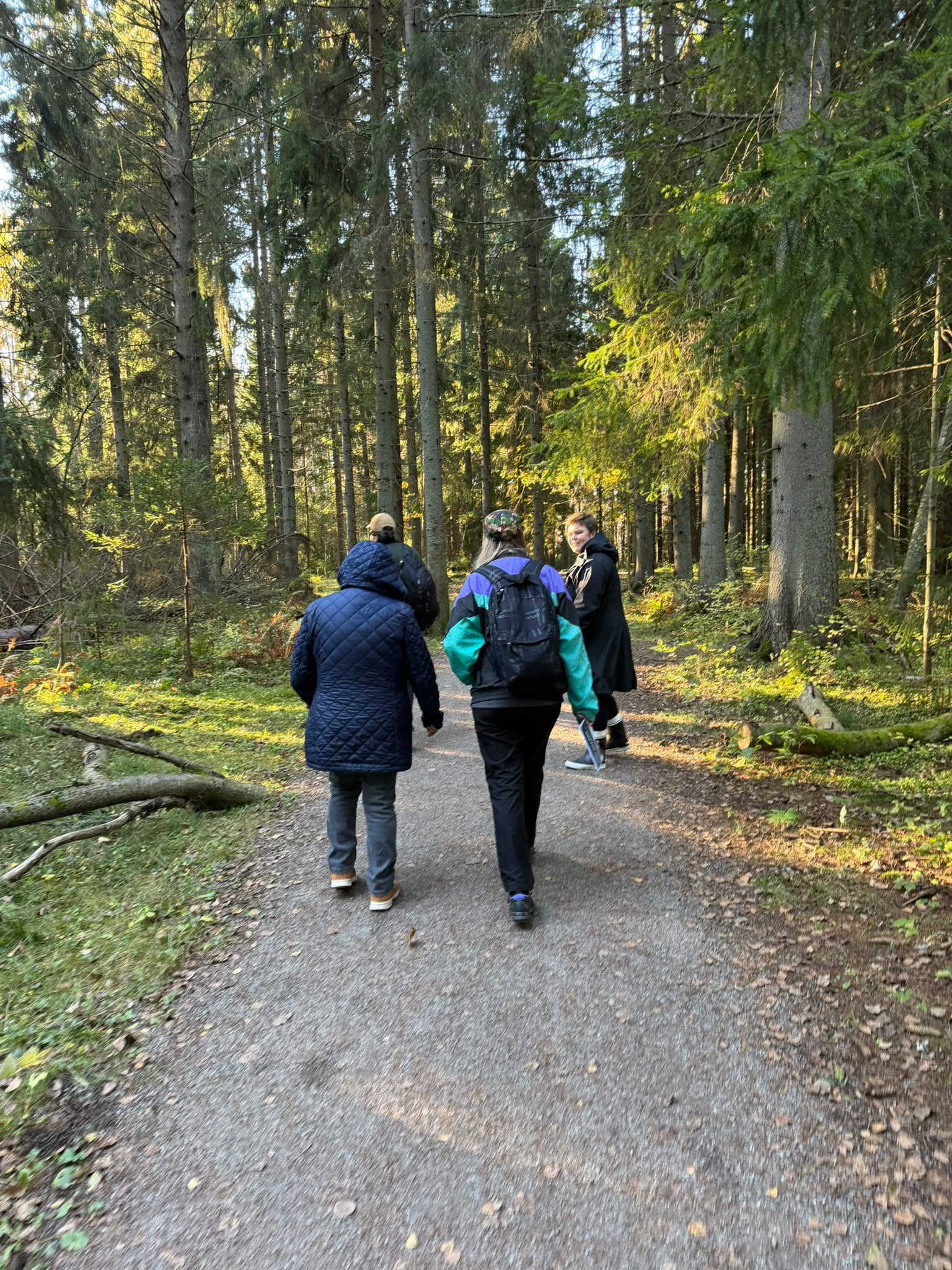
On Tuesday 20 October, JADE invited GoSphereX to join a walk with its Spanish-speaking peer group in Uutela, Vuosaari. JADE works with people over 50 with a migrant background in Finland. The nature part of the afternoon was shared with Vihreä veräjä. We brought two pairs of binoculars, three handouts and a set of maps, and one question: what is the wetland under this forest?
The walk
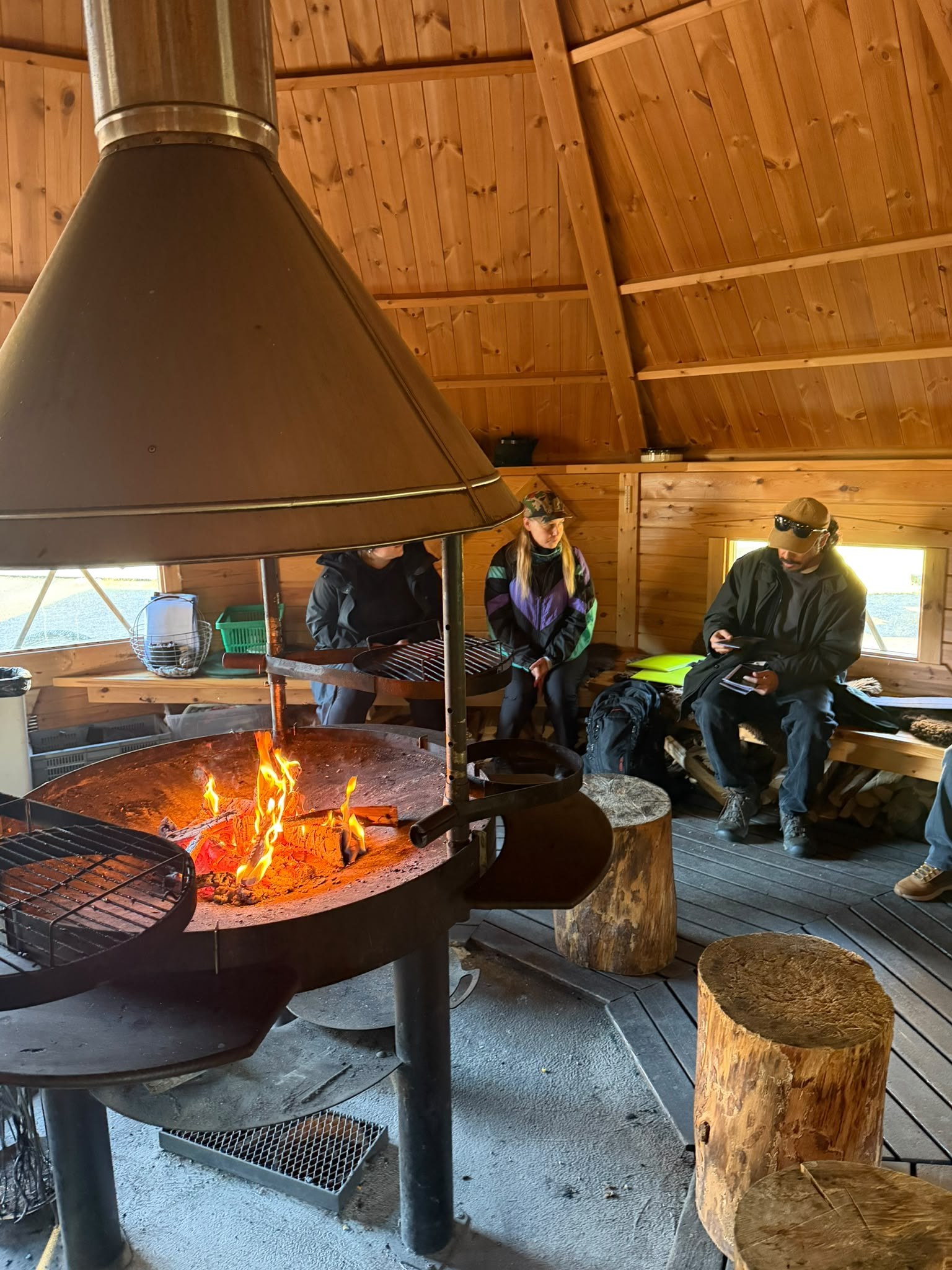
It was a small group: three participants, two people from JADE, one from Vihreä veräjä, and two of us from GoSphereX. We walked about two kilometres through the forest to the fire hut at Skatan tila, stopping along the way to look, to talk and to pass the binoculars around.
Rudträsk, under the forest
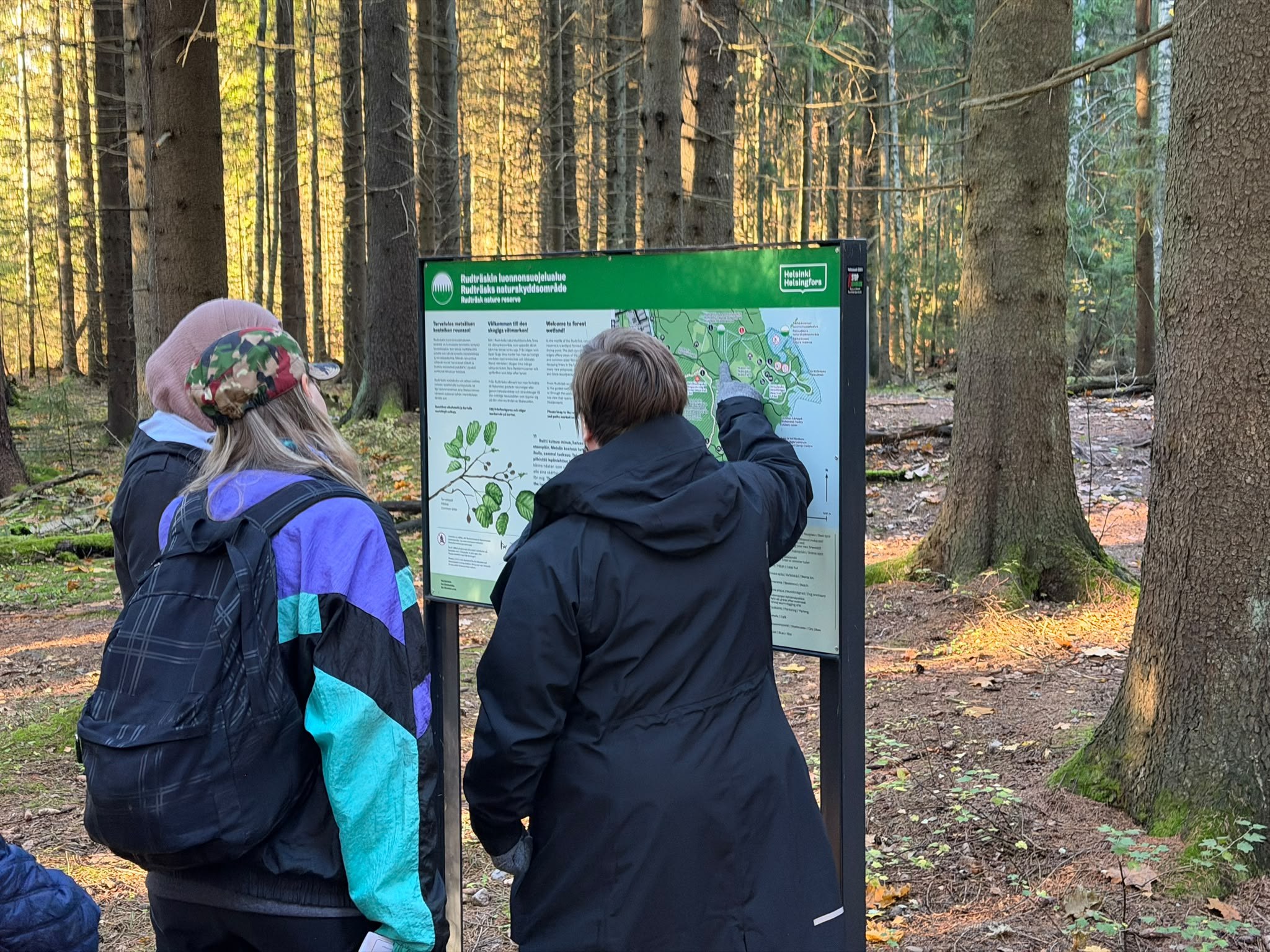
Before the walk, we looked at the area on Finland’s national map service, Paikkatietoikkuna. Close to the trail lies Rudträsk, a small peatland: wooded around its edges and open in the middle. It is part of the Rudträsk nature reserve, protected since 2022. The sign on the trail calls it a forest wetland that formed out of a drying pond.
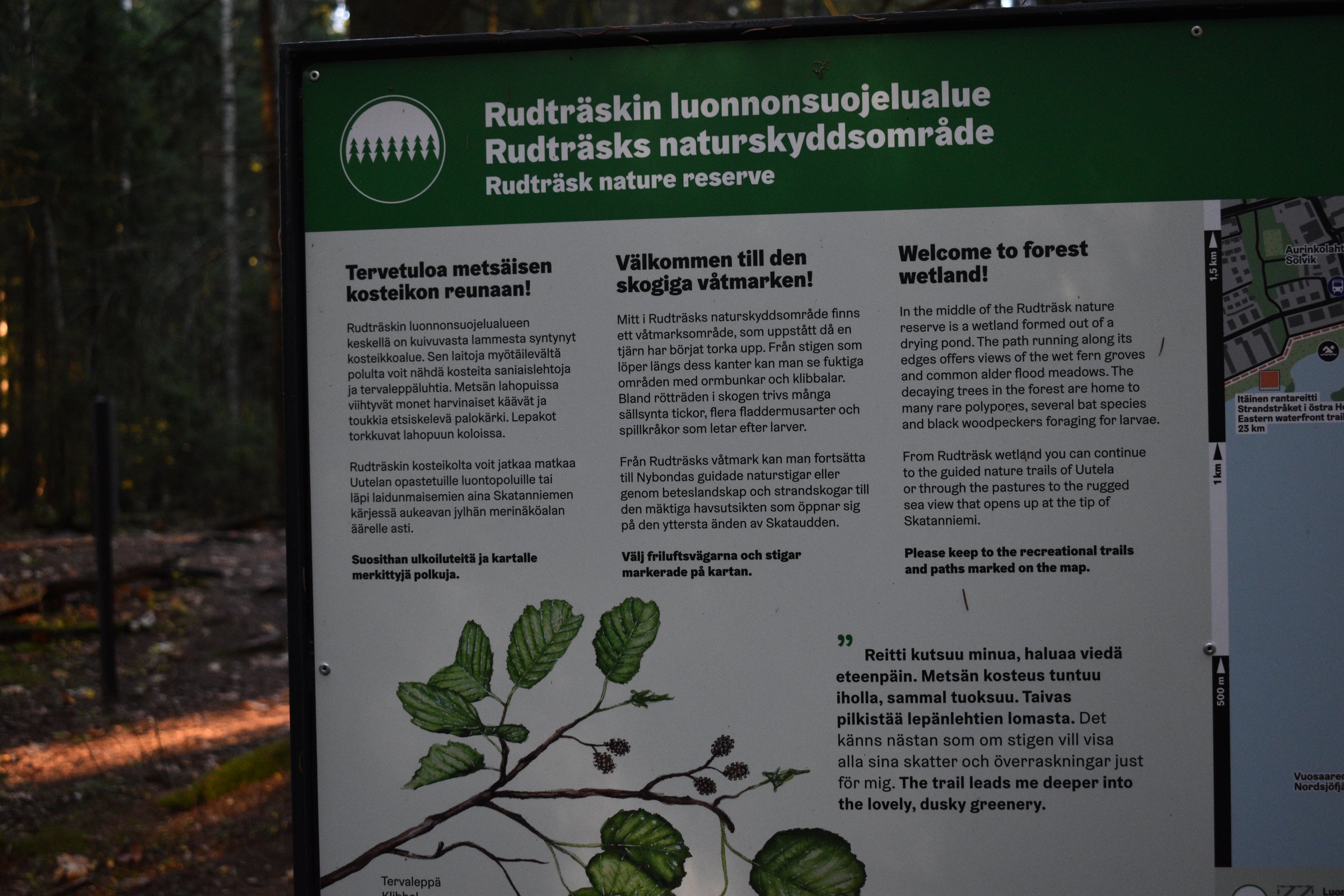
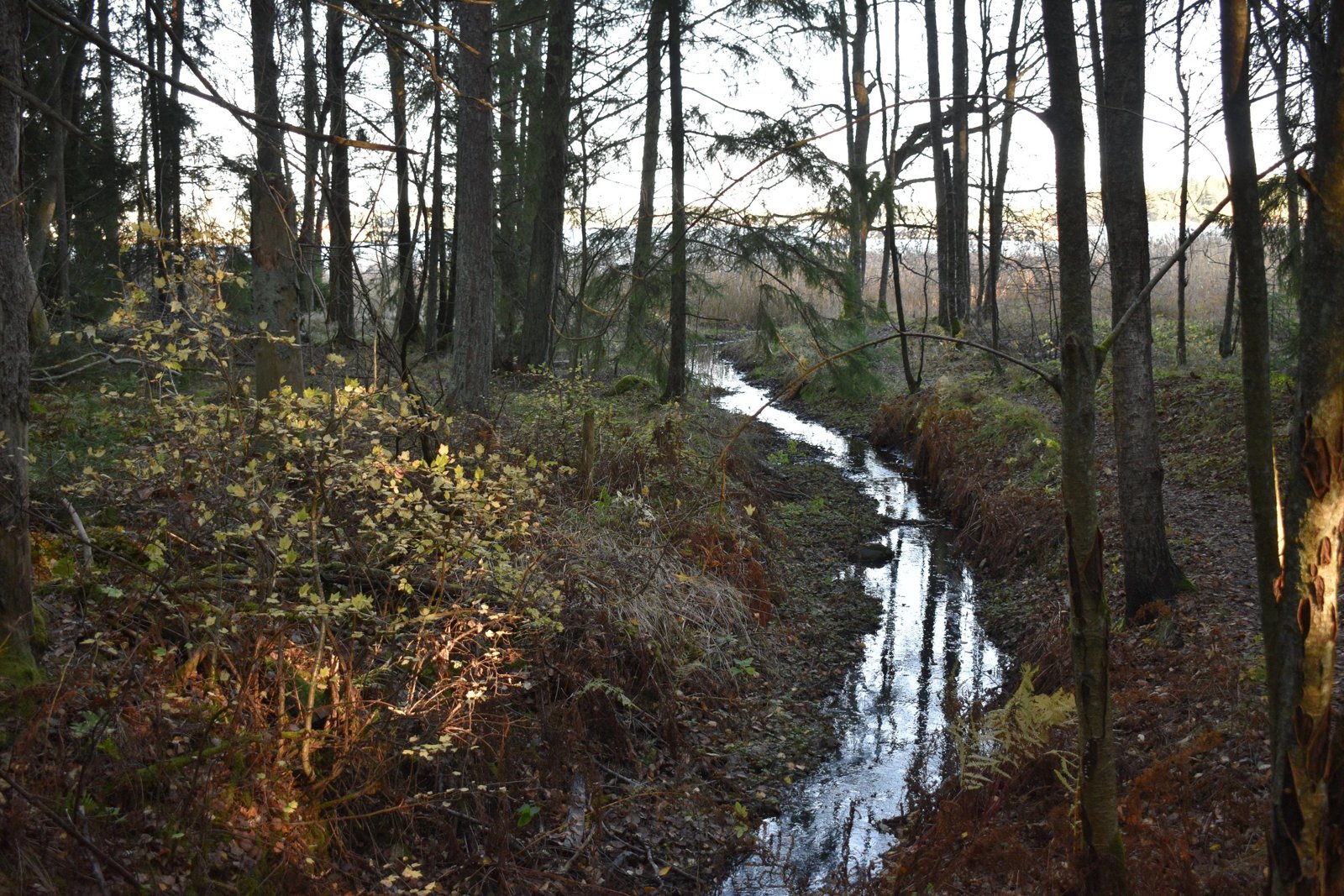
The sign also asks visitors to stay on the marked paths, so we did. We walked close by without stepping onto the peat. Along the way we saw narrow, straight channels of running water. On the national map they appear as small watercourses. The map data does not tell old drainage ditches apart from streams, so the most we can say is that they look like ditches.
What we talked about
- What a peatland is. A wetland where plant remains build up as peat, because the water keeps oxygen out and slows down decay.
- Why peatlands matter in Finland. Peat holds carbon that has built up over thousands of years. When a peatland is drained, the peat dries out and that carbon is released, mostly into the air as carbon dioxide and partly through the water.
- Where the water goes. Drainage ditches carry dark, nutrient-rich water away from the peat, towards rivers and, in the end, the Baltic Sea.
- Why it is easier to protect than to repair. It is easier to keep carbon in the ground than to capture it again.
The materials
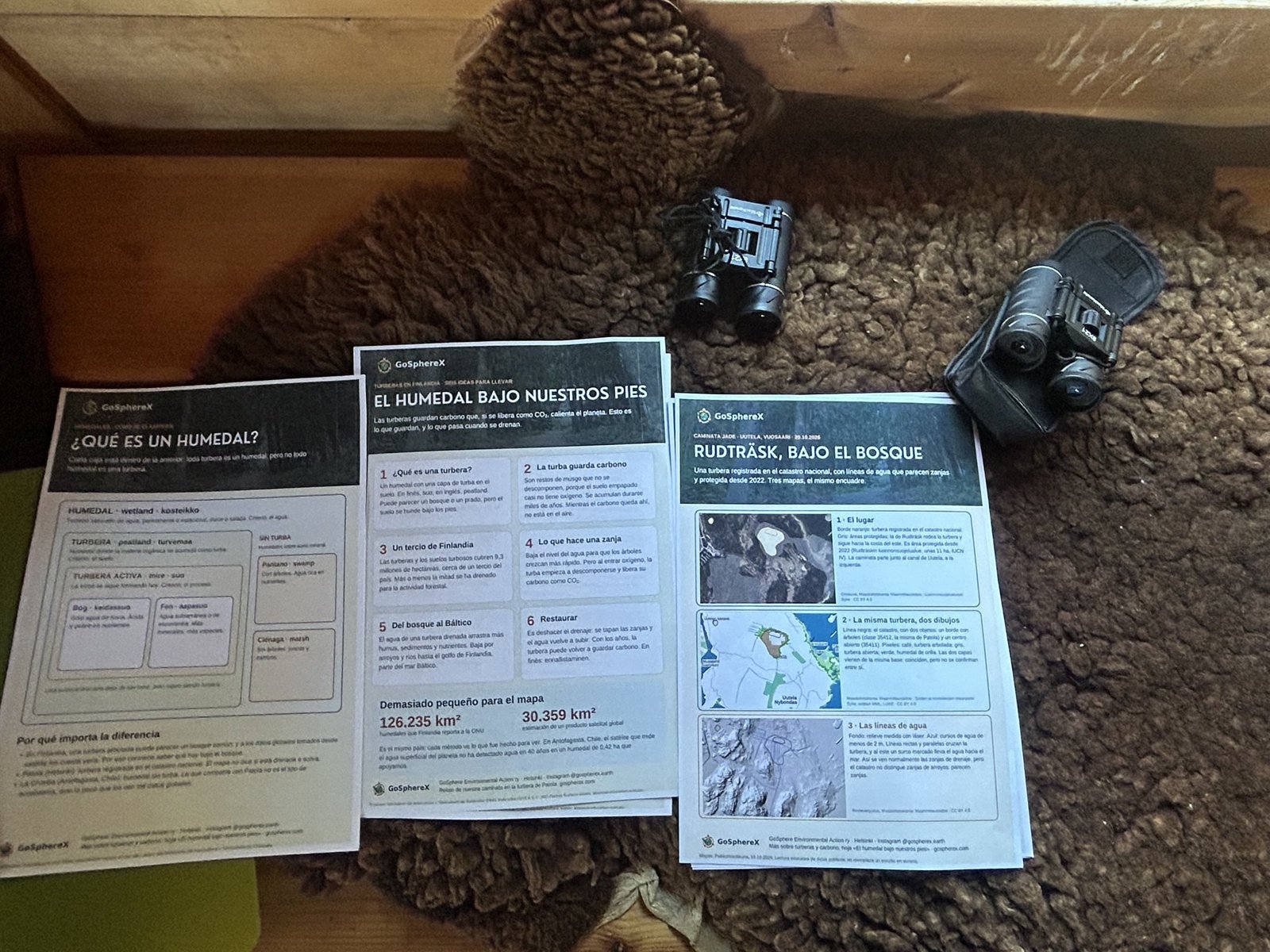
Everyone took home a copy of each handout, in Spanish:
- What is a wetland? How wetlands, peatlands and mires fit inside each other, and the difference between a bog and a fen.
- The wetland under our feet. What peatlands are, why they are drained and what restoration means.
- Rudträsk, under the forest. Three maps of the same place: an aerial photo with the protected area and the peatland marked, the peatland as the national map data draws it, and the terrain with its watercourses.
We also handed out the leaflet from our earlier walk at the Patola peatland in Helsinki.
Why this walk matters to us
In Antofagasta, northern Chile, we support community-led work at a 0.42-hectare urban wetland. Here in Finland, the wetlands people walk past are often peatlands under a forest. In both places the problem is similar: a small wetland is easy to overlook. Part of our work in the Global North is helping people see these places, and a walk with a map in hand is one of the simplest ways to do it.
Thank you
To JADE for inviting us, to Vihreä veräjä, and to everyone who walked with us. If your group would like a walk like this one, write to us at contact@gospherex.com.
What it cost
The walk cost €4.00, for printing ten copies of the Rudträsk map sheet. The other two handouts were printed free of charge at Stadin yhteisötalo Oulunkylän Seurahuone. The two pairs of binoculars, €39.80 in total, were bought for our environmental education activities and will be used again. Both purchases were paid from the surplus of our first small fundraising campaign, which may also support environmental education activities in Finland. That campaign was set up with an 83/17 split: 83% (€2,000) for Raíces Endémicas’ work at La Chimba, and 17% (€400) for documented campaign costs.
Follow GoSphereX on LinkedIn or Instagram for updates on our work in Chile and in Finland.
Photos: GoSphereX and JADE. Maps: Paikkatietoikkuna (National Land Survey of Finland and Finnish Environment Institute, CC BY 4.0).
Pienkeräysnumero RA/2026/413 (Helsinki Police Department, valid 31.03.2026–29.06.2026). Organizers: Alejandro Araya (Chairperson), Soile Araya (Vice-Chairperson), Jenni Keväänvirta (Secretary), board members of GoSphere Environmental Action ry (Y-tunnus: 3583160-5). Funds support community-led wetland restoration at Vertientes de La Chimba Norte (Antofagasta, Chile) implemented by Raíces Endémicas, and environmental education activities of GoSphere Environmental Action ry in Finland. Contact: contact@gospherex.com