
From milestone to evidence: the first operational cycle of the pilot project.
May 31, 2026
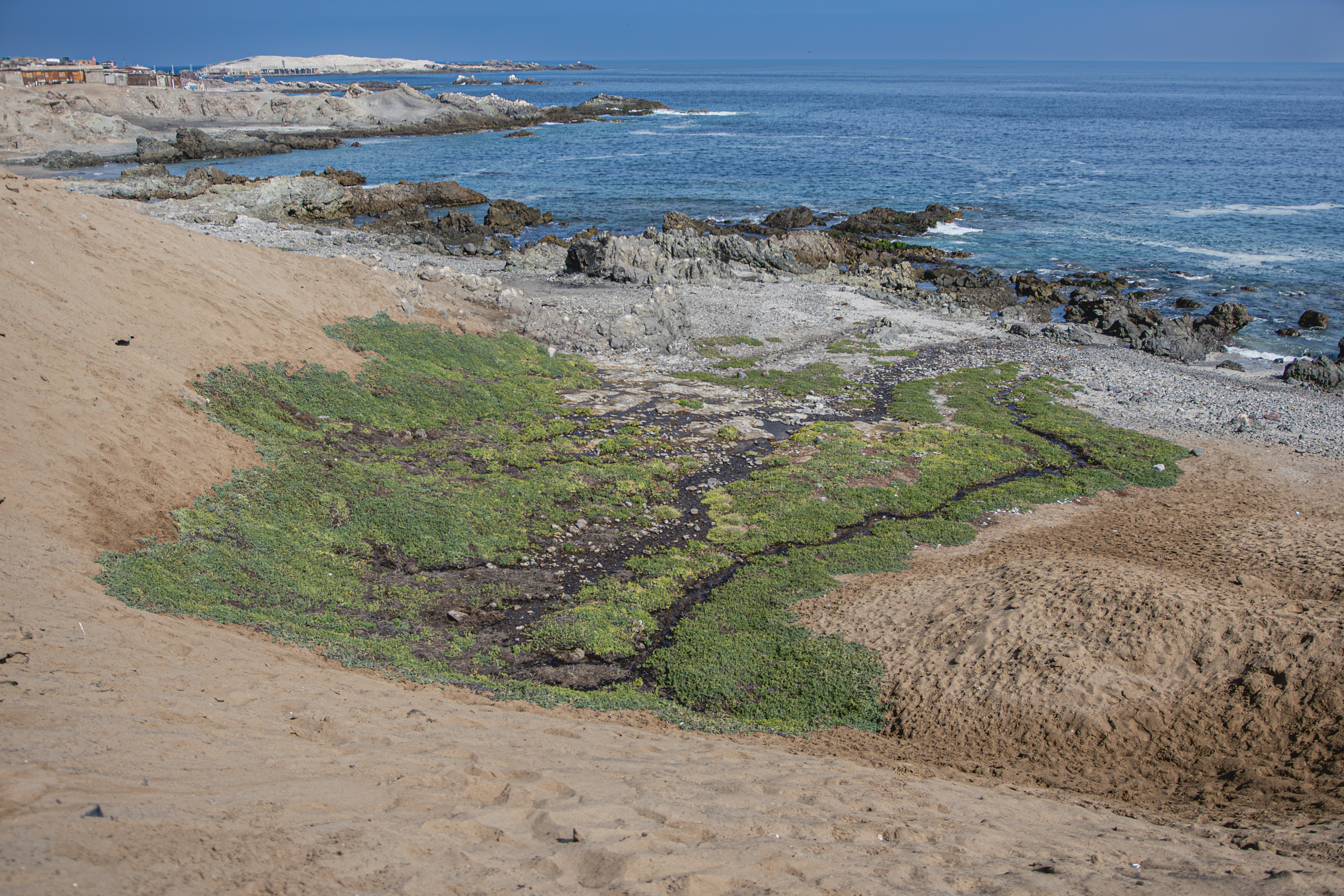
Vertientes de La Chimba Norte sits within the urban edge of Antofagasta, between the desert and the Pacific. Photo: Felipe Muñoz
From commitment to action
In April 2026, GoSphere Environmental Action ry’s first fundraising campaign reached its initial goal of €2,400. We committed to allocating 83% (€2,000) to project activities in Chile, implemented by our local partner Raíces Endémicas at Vertientes de La Chimba Norte. The remaining 17% (€400) was committed to documented campaign costs.
The transfer to Raíces Endémicas was structured in two installments: a first installment at the start of the operational cycle, and a second installment mid-cycle. The first installment was sent ahead of the May 16 operation and made the start of field activities possible. This article documents that first activity in the operational cycle, with full traceability between donation, transfer, and field action now publicly recorded for the first time in the life of this project.
What happened on May 16
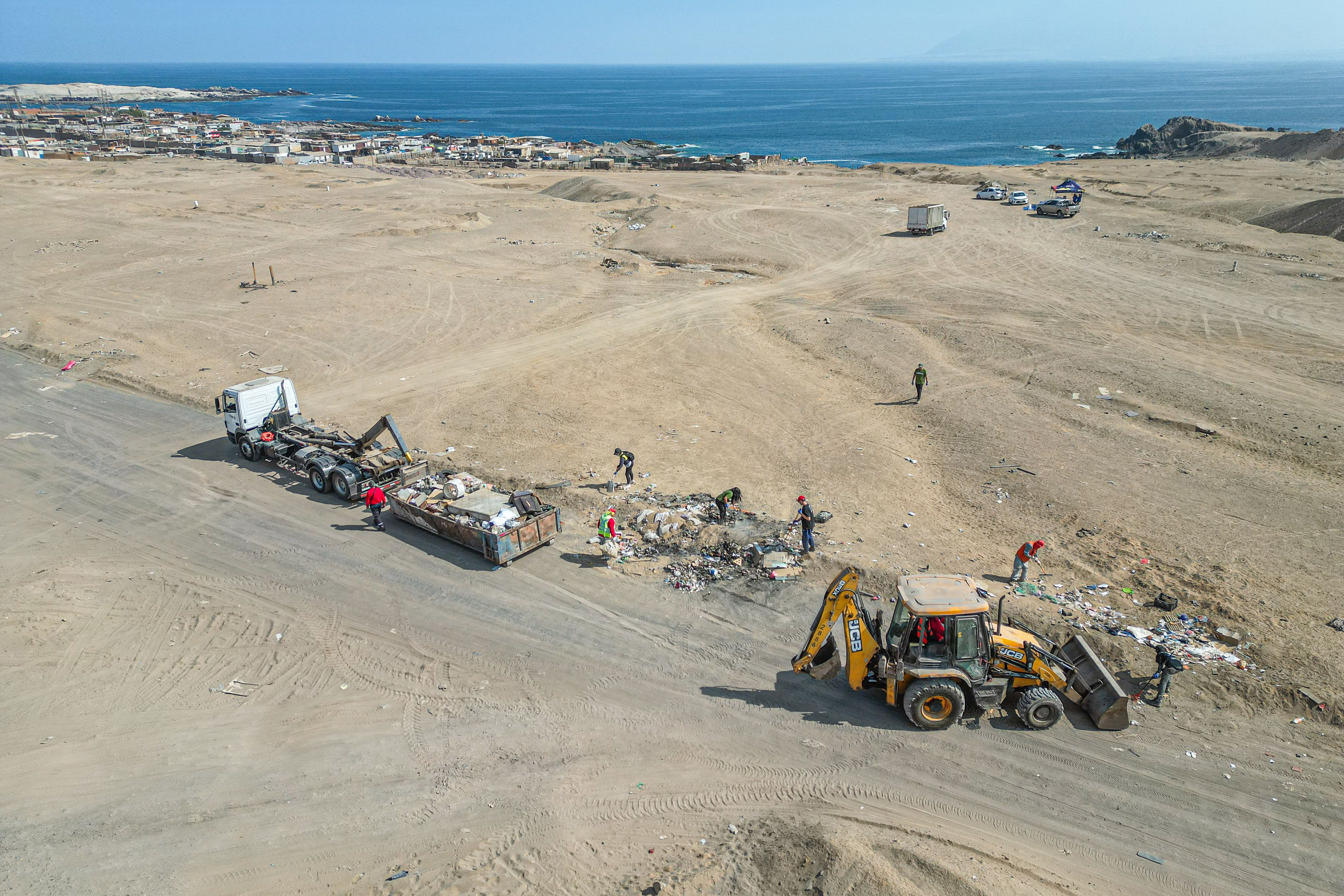
The first field operation was held on Saturday, May 16, 2026, from 10:30 to 12:30. Carmen Serrano, President of Raíces Endémicas, led the activity. Twenty-four people participated, distributed between Raíces Endémicas board members, regular volunteers, community volunteers reached through open social media calls, and visitors who joined on the day.
The Antofagasta City Council, through its Environmental and Cleaning departments, provided institutional support, including heavy machinery and a dump truck for waste removal. Aguas Antofagasta, the local utility company, also supported the operation as part of the broader institutional ecosystem around the site.
What was done
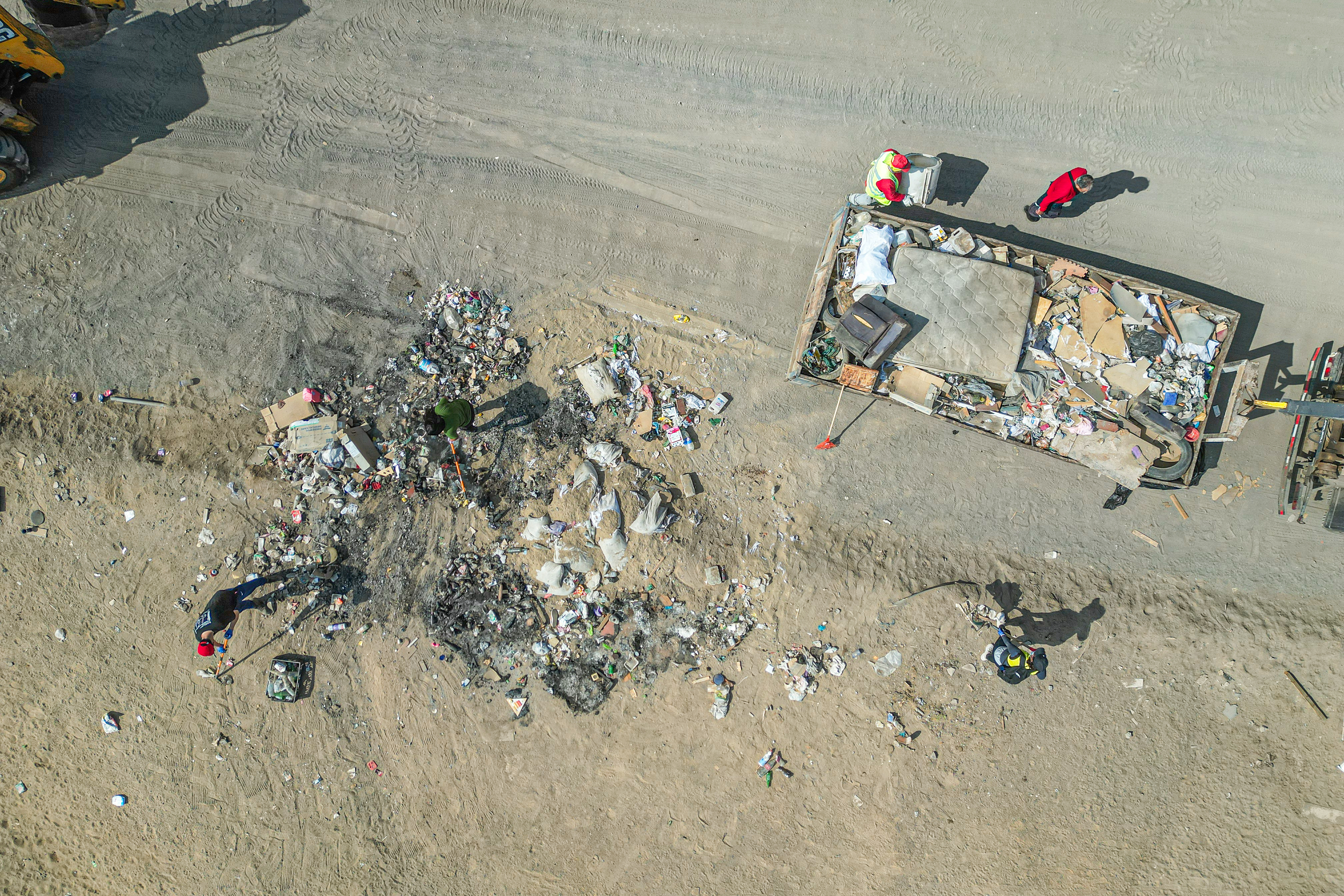
The team worked across the wetland, with particular focus on the area near the spring water sources and the discharge point toward the Pacific, where waste accumulation was most concentrated. The work was demanding. The site holds long-standing urban pressure, and the volume of accumulated material reflects years of unregulated dumping in surrounding areas.
By the end of the operation, approximately 4,500 kilograms of waste had been removed and sent to the municipal landfill. An additional 78 kilograms were separated and directed to recycling. The categories of waste retrieved included domestic refuse, plastic bags, glass and plastic bottles, construction debris, microplastics, wood, and organic matter. The team also encountered the remains of an informal settlement that had recently been removed from one of the wetland sectors, which significantly added to the waste volume.
We want to be clear about what these numbers do and do not represent. The 4,500 kilograms reflect what was retrieved on May 16, in two hours of intensive work, in a specific portion of the wetland. They do not represent a measurement of the wetland’s overall environmental condition, nor a claim about restoration outcomes. They are an honest record of the material removed.
What was observed
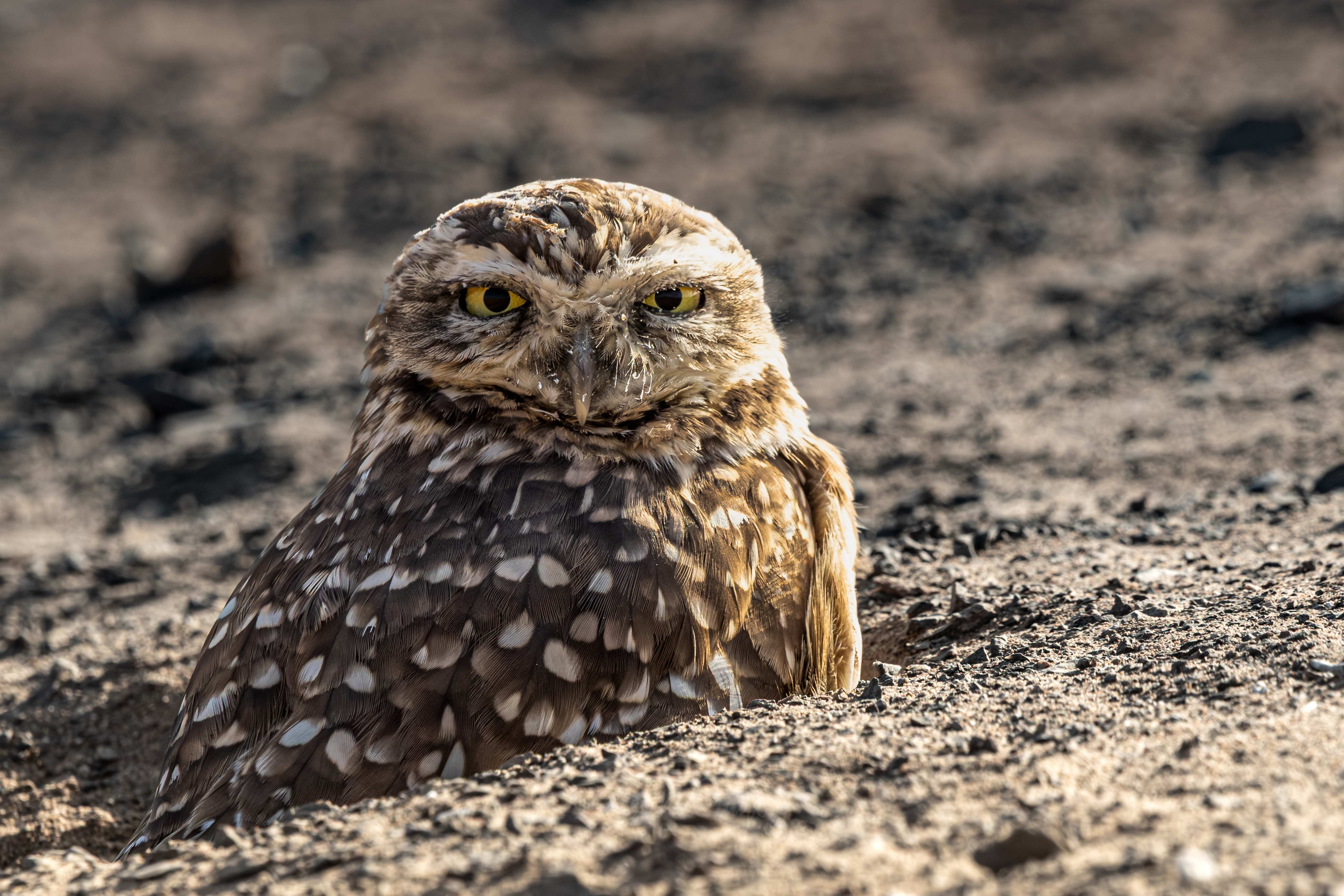
Beyond the cleanup itself, the team documented the state of the wetland during the operation. Surface water was present across the full extent of the site. The team observed six bird species during the activity, including the burrowing owl (Athene cunicularia), classified as Vulnerable by the IUCN Red List, along with the black-fronted ground tyrant, the American kestrel, the white-bellied seedsnipe, the turkey vulture, and a hummingbird species pending confirmation.
The presence of bird species that are not endemic to the immediate area suggests that the wetland continues to provide the ecosystem services needed for rest and feeding for migratory and visiting fauna. This is a positive signal, although one to interpret with care: presence does not by itself confirm ecosystem health.
The team also identified new pressures. Small dumping points have appeared close to known burrowing owl nesting zones. Two or three sprouts of an invasive plant species, cherry tomato, were observed in the central sector of the wetland. An invasive tree that had been documented in previous years remains present and continues to grow. These observations will inform the focus of the next field operations.
An ecosystem that holds itself together
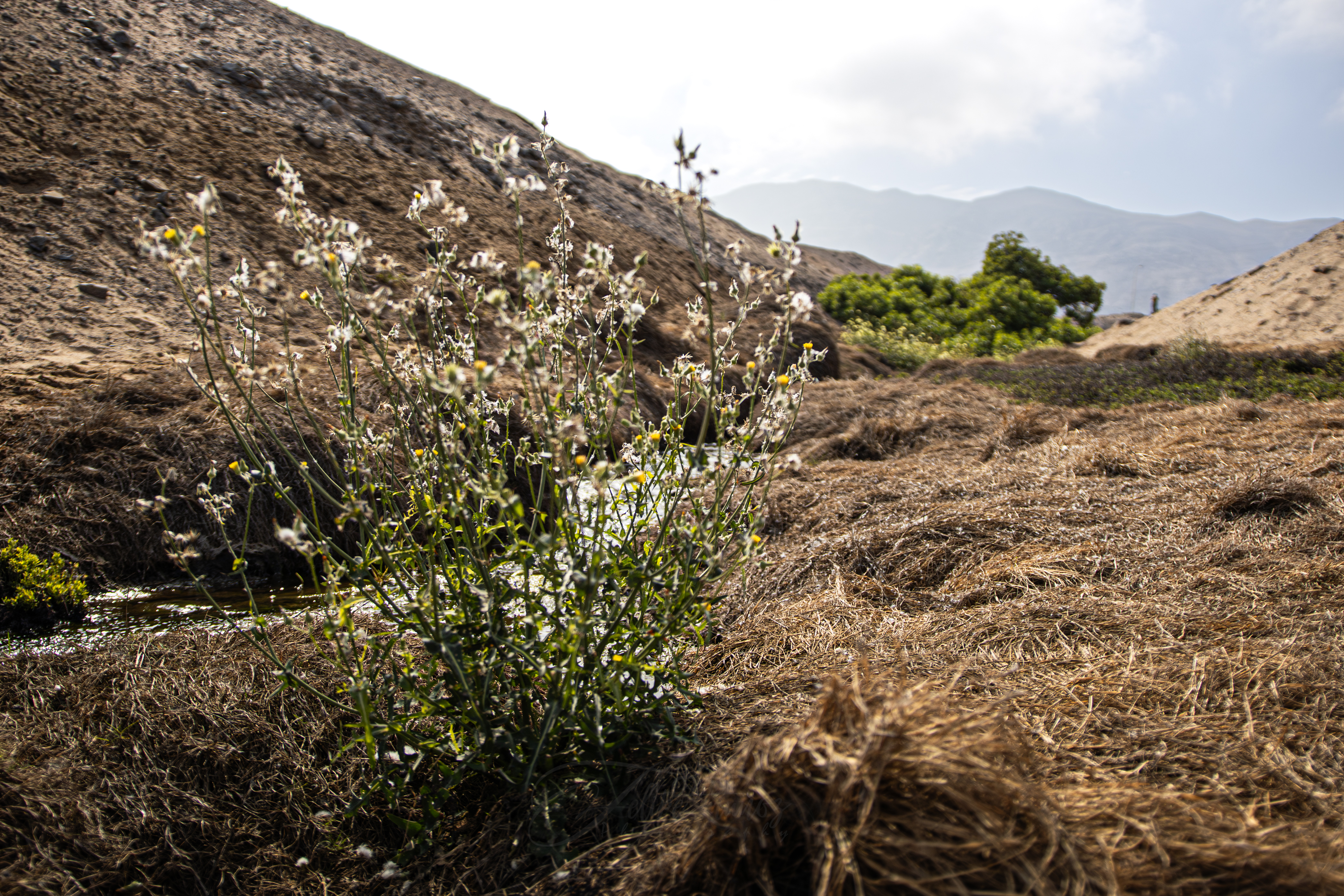
The wetland is a small, persistent system. It runs from a set of spring water sources at its head, through a vegetated streambed, to a discharge point at the Pacific Ocean. Despite the surrounding pressure, it continues to function as a wetland. Water flows. Native vegetation holds the streambed in place. Birds use it. The system is degraded, but it is not gone.
This is the reason the site is worth supporting. Not because it is pristine, but because it persists, and because the community organization that has documented and defended it for years (Raíces Endémicas) has built the local knowledge to work with it. Our role, as a small Finnish NGO, is to channel international support transparently and to make the work visible.
What this cost
For this first field operation, approximately 185,000 CLP (around €175 at current exchange rates) were used from the funds transferred to Raíces Endémicas. The expenses included gloves for the team, the contracted videographer who documented the operation (Felipe Muñoz, @felipe_imc), and the printing of an informational banner used on site.
The detailed expense report, with documentary backing for each individual cost, will be consolidated as part of the formal financial accountability report (tilitys) that GoSphere Environmental Action ry will submit to the Finnish Police Department by August 2026, as required by Finnish small fundraising law.
We commit to publishing the consolidated expense record on the website once the operational cycle is complete and the tilitys has been filed. Until then, partial records are kept internally and validated against original receipts as they arrive.
What we did not measure
To stay honest about the scope of this first operation, we did not measure several things that ecological restoration claims often include. We did not measure hectares of wetland restored in any technical ecological sense. We did not conduct systematic bird counts using replicable methods. We did not collect water quality samples. We did not estimate biodiversity indices.
What we did was retrieve waste, document the operation visually and in writing, observe what was present at the site that day, and identify new pressures and signs of recovery. These are the kinds of records that can support a credible long-term picture, but only if accumulated over multiple operations and complemented later with more systematic methods. We prefer to under-claim now and let the evidence accumulate, rather than over-claim early and erode trust later.
What comes next
Ten additional activities are planned at the site between June and September 2026, including two more cleanup operations, three environmental education workshops, two interpretive signage installations, and three guided visits with community monitoring. The next field operation is scheduled for early June.
Each activity will be documented through the same structured reporting system used for this one, with field forms completed by Raíces Endémicas and processed by GoSphereX, and the consolidated record made publicly available as the operational cycle advances. The formal financial report (tilitys) will be filed with the Finnish Police Department by August 2026.
Acciones con propósitos.
Actions with purpose.
Carmen Serrano, President, Raíces Endémicas
Pienkeräysnumero RA/2026/413 (Helsinki Police Department, valid 31.03.2026–29.06.2026). Organizers: Alejandro Araya (Chairperson), Soile Araya (Vice-Chairperson), Jenni Keväänvirta (Secretary), board members of GoSphere Environmental Action ry (Y-tunnus: 3583160-5). Funds support community-led wetland restoration at Vertientes de La Chimba Norte (Antofagasta, Chile) implemented by Raíces Endémicas, and environmental education activities of GoSphere Environmental Action ry in Finland. Contact: contact@gospherex.com